On this page
Make the trail part of the story.
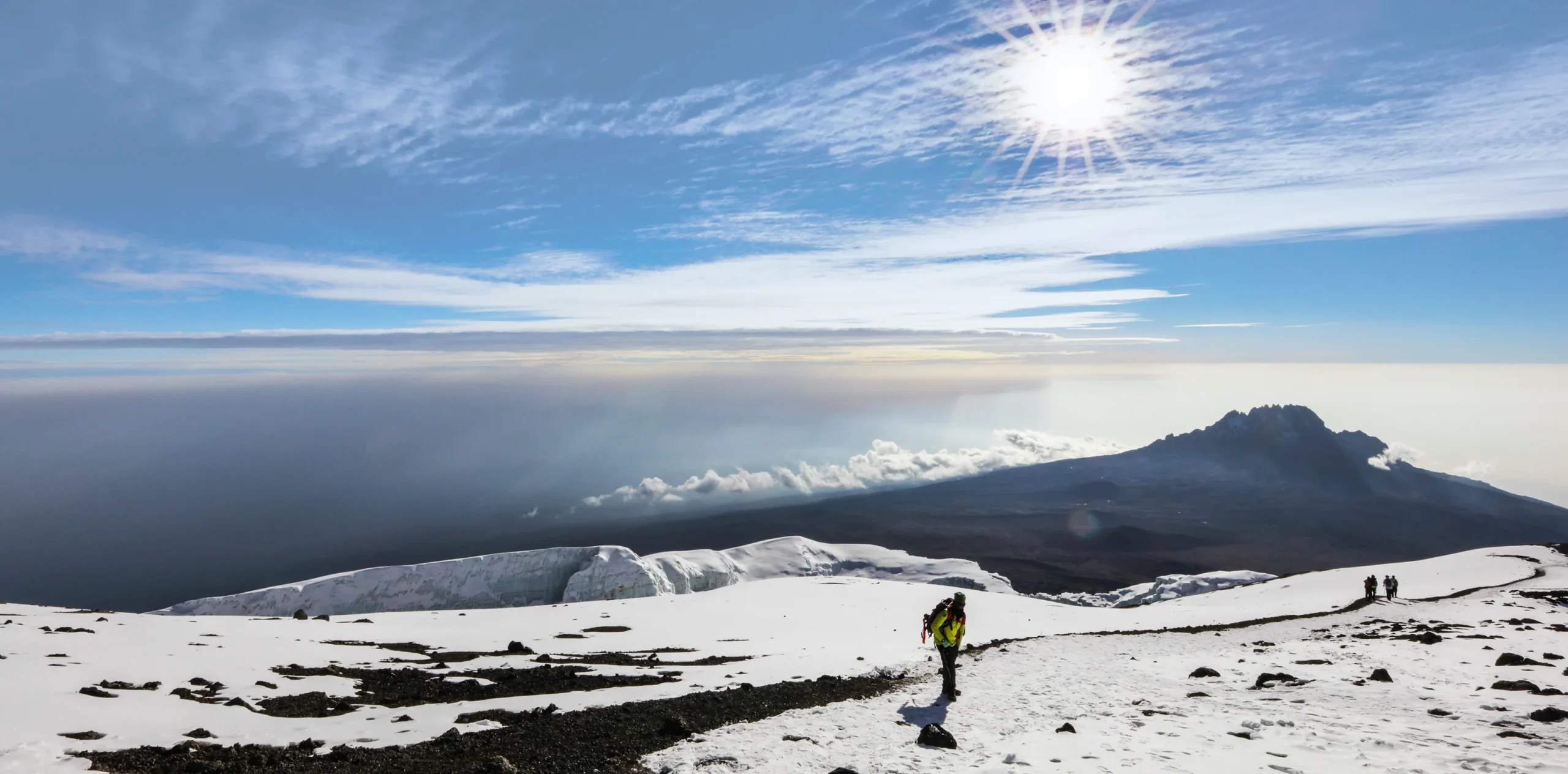
Kilimanjaro rises in northern Tanzania near the Kenyan border, its broad massif visible across the plains around Moshi and Arusha. The classic trek is a multi-day ascent through a sequence of vegetation zones: cultivated lower slopes, dense rainforest, open moorland, stark alpine desert and finally the summit plateau and ice fields. Each band brings different weather, footing and colour, and the walking is usually unhurried, with rest days built in to help acclimatisation.
The summit, Uhuru Peak, sits on Kibo, the highest of the mountain's three cones. Reaching it depends on fitness, pacing, weather and how each person responds to altitude. Many trekkers find the final night long and cold, climbing by torchlight before dawn. The reward is the sense of an entire journey completed step by step, whatever the view at the top.
Choose with the whole climb in mind.
Spacing for acclimatisation
Longer itineraries with gradual height gains generally help trekkers adjust to altitude. When comparing routes, look at how many days are spent above key altitudes and whether rest days are included, not only the final camping night.
Landscape and character
Some paths cross the open moorland of the Shira Plateau, others the scree and volcanic ridges nearer Kibo, and some approach through quieter western forests. Each has its own rhythm of walking and scenery, so match the route's character to what you want from the trip.
Descent and comfort
The way down matters too. Consider the gradients, scree and footing on the descent, and how the route balances long walking days with time to eat and sleep. A comfortable, well-organised schedule supports both safety and enjoyment.
Prepare before you arrive.
Walking fitness and practice
Build up with regular hilly walks carrying a day pack, and practise walking slowly and steadily. The summit stage is mostly about endurance and rhythm rather than speed, so training that reflects long days on foot is the most useful preparation.
Layers and cold nights
Conditions change quickly with altitude. Plan for warm daytime sun, rain lower down and genuinely cold nights near the top. Layered clothing, a good sleeping system and reliable wet-weather gear make a real difference to comfort.
Seasonal timing
Tanzania's mountain seasons vary, with generally drier and wetter periods. Rain, snow and cloud can occur at any time, and the best window is never guaranteed. Research current conditions and plan flexible travel dates rather than relying on a fixed expectation.
Health and altitude
Altitude can affect anyone, regardless of fitness. Arrange a medical check-up before travelling, discuss altitude medication with a qualified health professional, and choose an operator with clear emergency procedures, experienced guides and sensible acclimatisation practice.
A realistic start to the adventure.
Is Kilimanjaro suitable for first-time trekkers?
It is a walkable high mountain rather than a technical climb, and many people with reasonable fitness take it on. Success still depends on preparation, pacing, acclimatisation and weather. A longer route and a steady approach improve the experience.
When is the best time to climb?
Many trekkers favour the drier months, but Kilimanjaro's weather is changeable and no season guarantees clear skies. The mountain can be wet, cold or snowy at any time of year, so pack for variability and check conditions close to departure.
Will I see glaciers and wildlife?
The upper slopes hold famous ice features, though their extent varies and can change over time. Lower forests and moorland support birds and small mammals, while large animals are rarely seen on busy trekking routes. Treat sightings as a bonus rather than a certainty.
How much experience do I need?
No technical climbing skill is needed on the standard routes, but stamina and a willingness to walk slowly matter. Speak to a reputable operator about route choice, group size, guide qualifications and how altitude is managed before committing.